
Evidence that student-led prevention works
Evidence-based, SAMHSA-recognized, and independently validated across 23 Michigan high schools over seven years.
Awards & recognition
National and state recognition, earned across more than a decade of independent evaluation.
- 2011SAMHSA Service to Science Award
- 2013SAMHSA grant funding the 7-year Wayne State study
- 2014NASADAD Award
- 2016NREPP listing (SAMHSA retired the registry in 2018)
- Best of 90Weikart Youth Program Quality Assessment
Prevention through student leadership
SLS integrates prevention, education, youth development, and social-emotional learning into an interactive, peer-led program built on grassroots efforts and community partnerships.
Michigan public education leaves a gap around alcohol, tobacco, and other drugs (ATOD). State surveys show substance use doubles from 9th to 11th grade, and quadruples in some counties.
Most students receive only one health credit during freshman year. SLS addresses this gap.
Our methodology engages youth as core, collaborative partners rather than passive recipients.
Bonding
Retreats, advisory boards, and belonging.
Skill development
Assemblies, community service, and leadership practice.
Mentoring
Older students teaching younger students.
The model is deliberately positive — fun, friendship, belonging, and leadership become the delivery system for prevention.
A 7-year independent evaluation
In 2011, SLS received the SAMHSA Service to Science Award. In 2013, SAMHSA awarded the Building Evaluation Capacity grant to formally evaluate the Students Leading Students program.
The long-term study (2011–2018) was led by Dr. Lisa Ficker of Wayne State University. Twenty-three Michigan high schools participated, with findings reported across seven outcome areas.
Request the full evaluation →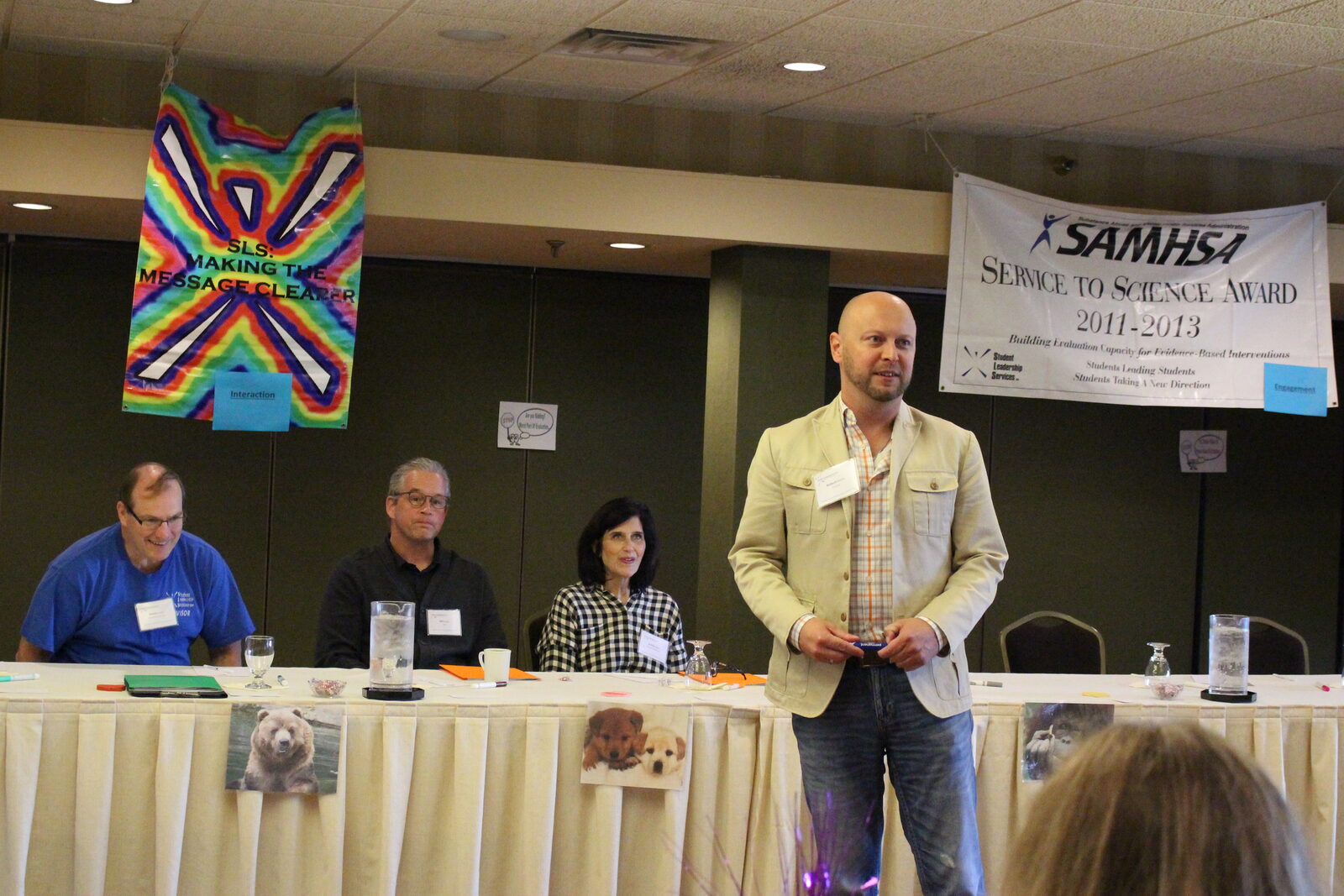
What the independent evaluation found
Students who took part in SLS showed stronger outcomes in substance-use prevention, school engagement, leadership confidence, social competence, bullying prevention, online behavior, and safe driving. The one area without a statistically significant difference was family cohesion.
Seven measured outcomes
What the evaluation measured in each of the seven areas, comparing students who took part in SLS with those who did not.
General Substance Use
Participants were less likely to have used ATOD in the past 30 days and in their lifetime.
Knowledge & Beliefs
Students became more informed about ATOD and more confident recognizing and resisting peer pressure.
School Engagement
Participants were more likely to demonstrate positive feelings about school.
Social Competence
Students felt more comfortable using leadership skills in classrooms and schools, with increased community service involvement.
Disruptive Behaviors
Participants were less likely to bully, less likely to send inappropriate social media messages, and more likely to demonstrate safe driving behaviors.
Victimization
Students were less likely to be bullied and less likely to receive inappropriate social media messages.
Family Cohesion
Neutral findingNo statistically significant difference in family support levels — reported here because credible evidence includes what didn’t change.
Aligned with national and state standards
SLS programs, services, and validated outcomes are aligned with the goals of national and state organizations working in youth health, safety, and prevention.
National recognition
SLS is nationally recognized by the Substance Abuse and Mental Health Services Administration. SAMHSA's National Registry of Evidence-Based Programs and Practices listed SLS in 2016, before the registry was retired in 2018.
SLS provides safe, stable, nurturing relationships where students develop leadership and resilience, teaching stress management, conflict resolution, and emotion regulation.
SLS engages students as active learning participants in a model that connects health and academic achievement through evidence-based practices.
SLS helps teens build skills for safe driving decisions, aligned with the National Highway Traffic Safety Administration’s mission to save lives and prevent road injuries.
Aligned with the Community Anti-Drug Coalitions of America in building community-level prevention capacity.
Michigan education alignment
SLS programs align across all five units: Skills for Health & Life, Social & Emotional Health, Safety, ATOD, and Healthy Relationships.
SEL is central to SLS. When students understand and regulate emotions, develop healthy relationships, and make responsible decisions, they lead safer, healthier lives.
Aligned with Michigan Department of Health & Human Services goals: reducing youth access, improving social norms, and increasing prosocial behavior.
Aligned with Goal 4: reducing high-risk factor impacts and implementing evidence-based integrated student supports across Michigan.
Youth development frameworks
SLS develops the external and internal developmental assets that help students build resilience and reduce high-risk behaviors.
SLS was evaluated using the Youth Program Quality Assessment, ranking among the best of 90 evaluated programs for safe, supportive, interactive environments.
SLS develops resilience skills helping students overcome challenges from living in families affected by addiction, aligned with the National Association for Children of Addiction.
Want to review the full Wayne State evaluation?
We’ll send the complete validation report and answer any questions about the evidence base.
For schools, funders, prevention coalitions, and community partners.